Cabinet hardware buying guide
How to Choose Cabinet Hinges for GCC Projects
The correct concealed hinge is defined by the cabinet and door, not only by the hinge appearance. A structured RFQ reduces sample changes and installation problems.
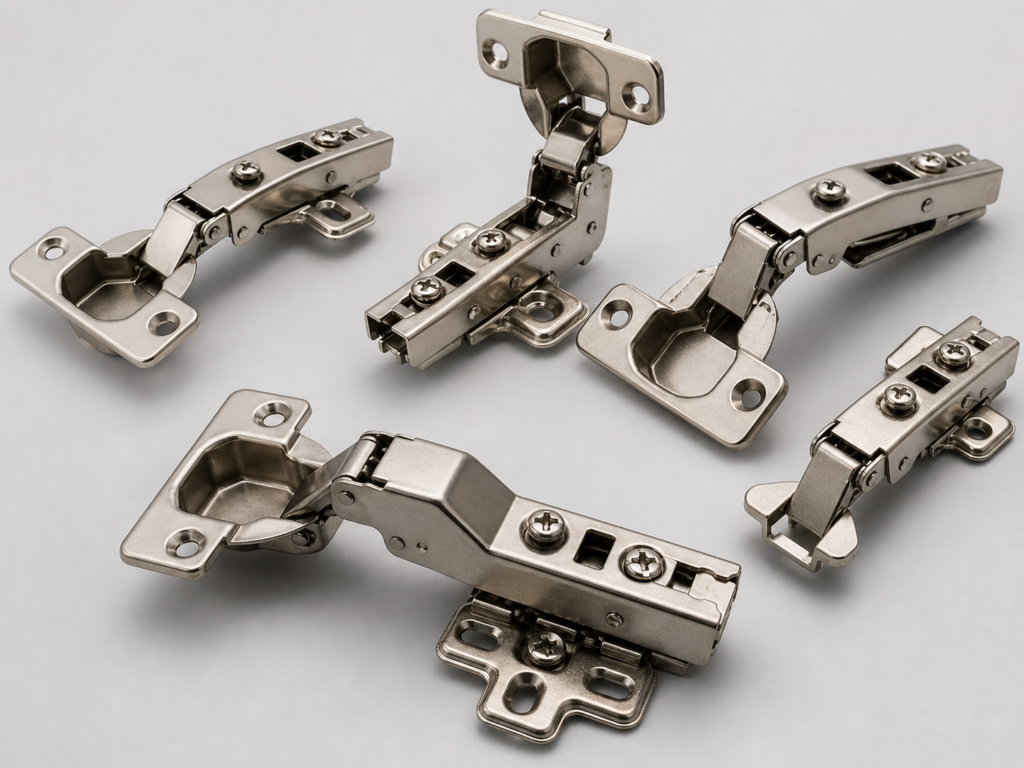
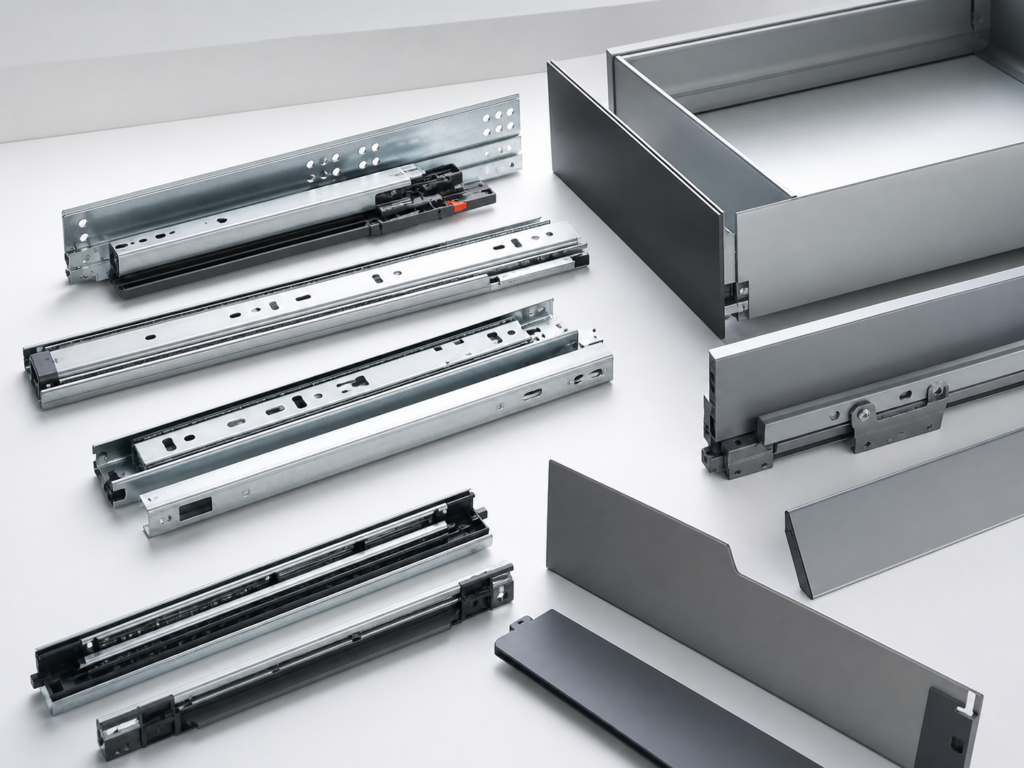
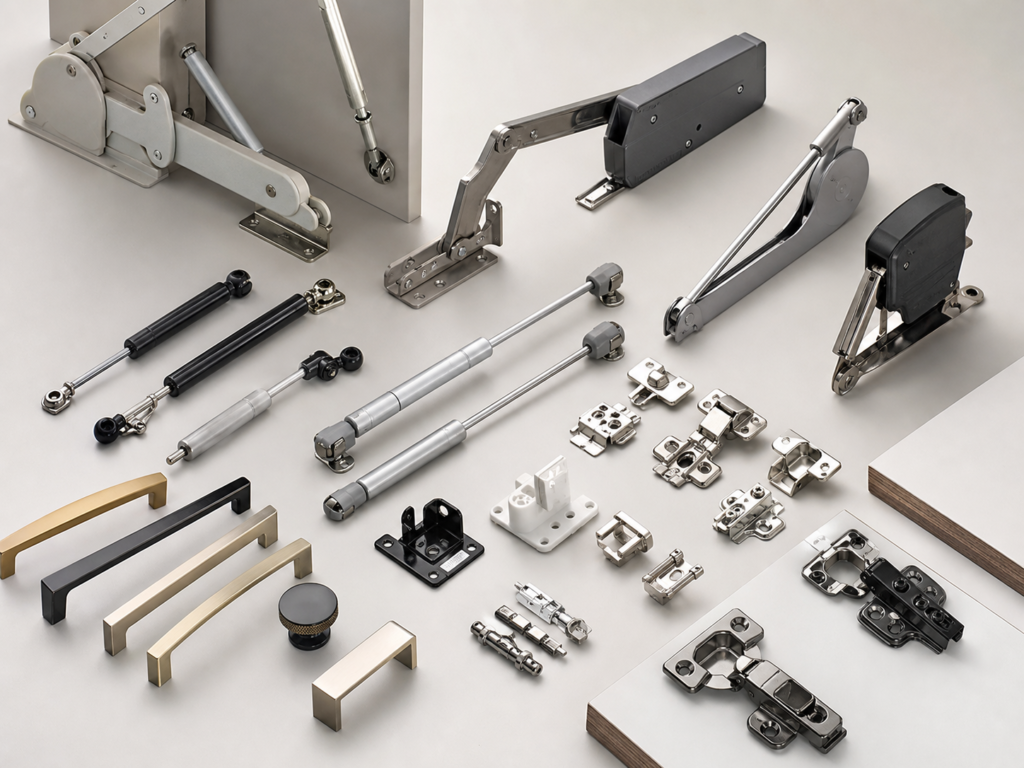
Start with cabinet and door geometry
Confirm whether the door is full overlay, half overlay or inset. Add the door thickness, cabinet-side thickness, drilling distance and required opening angle.
For corner units, thick doors or unusual profiles, include a section drawing and clearance around adjacent doors or panels.
Define the closing function
Specify soft-close, self-close, free-swing or push-open. Do not combine assumptions about dampers and opening devices without confirming the complete door system.
State the expected use environment, especially for kitchens, vanities, commercial furniture or high-frequency project areas.
Prepare the packing requirement
List whether screws, mounting plates and cover caps are included. For distribution orders, define pair or piece packing, barcode labels and carton quantities.
For GCC projects, add destination, required project marks and any language or document requirements to the RFQ.
Use a sample approval record
Keep the approved hinge model, plate, finish, screw pack and installation reference together. Bulk orders should refer back to the approved set.
Review CabFitCo concealed hinge options or send the drawing through the RFQ form.
Supplier evaluation
Compare quotations on specification, not unit price alone
Two cabinet-hardware quotations are only comparable when the product configuration is the same. Check dimensions, material, finish, mounting method, load or door data, closing function, accessories and packing quantity. A lower unit price may reflect a different model, missing accessories or lighter packing.
Ask the supplier to reference every quoted item to the drawing, BOM or target sample. Record open questions separately from confirmed specifications. This makes technical review faster and prevents an unconfirmed assumption from becoming part of the purchase order.
Quality Control
Define dimensions, function, finish, accessories and packing acceptance.
Packing and Shipping
Review labels, carton quantity, project marks and export preparation.
OEM and Custom
Prepare private-label artwork, item codes and sample packing.
Order control
Use approved samples and stable item references
Before bulk production, confirm a sample or a documented reference for each important configuration. The approval record should include the item code, revision date, drawing, finish, accessory pack and packaging format. Photos are useful supporting evidence, but dimensions and functional requirements should remain the primary reference.
For repeat orders, keep the approved item code unchanged unless the specification changes. If a substitution is proposed, review it as a new configuration instead of assuming equivalence. Stable references improve receiving checks, reduce installation questions and help purchasing teams compare later quotations.
For a drawing-based quotation, send the available PDF, DWG, DXF, product photo, BOM and quantity through the CabFitCo RFQ form. Include the destination market and required delivery schedule so packing and consolidation can be reviewed with the product specification.
Need a project quotation?
Send the target specification, drawing or BOM for a model-by-model review.